|
“I have to do all I can get get my energy up” A client had just returned from an international trip, and was experiencing the expected jet lag. She was continuing to go the gym (but easing back in) and taking her daily walks. Her sleep hasn't quite stabilized again yet. She felt at a ‘7/10’ for stress level because her business is growing and she wants to step into her leadership role more, yet still feels most comfortable trying to ‘do all the things' and believes that doing more of her usual self-care is just part of the fatigue-recovery process. As our session began, her voice was noticeably a little rough and lacking the bright resonant tone I know she's capable of. When her voice falls into this mode, if she doesn't shift it into her smooth, easeful, connected sound, then before long she feels even more strain with talking, which then worsens the fatigue. And the cycle continues. But today wasn't about just reviewing a few voice warm-ups to get her voice back on track. Today called for deeper rest. We often think of rest as going on vacation (but perhaps not fully unplugging as we scroll on our phones), getting a good nights sleep, watching our favorite shows, a coffee date with a friend, maybe being outside, pausing between the endless to-do list, or just grabbing a brief moment in the bathroom to catch our breath. For some, that gets them by in the short term. Long-term though, it can contribute to elevated levels of chronic stress. Our nervous system needs longer periods of minimal to no stimulation to activate its rest/digest/recovery capabilities. I don't know about you but it took me quite while to ditch the ‘shoulds' and feelings of guilt for resting for even more than an hour. I had to be a conscious choice to make rest a priority.  Deep rest takes intention and practice. And, I believe we can access deep rest with the healing power of sound from the voice. Releasing any stagnant stuck energy from within and around your entire being.
I led my client through a simple yet highly specific breath-voice practice that purposely encourages the parasympathetic nervous system to take over, and afterwards she exclaimed, “that was AWESOME! I'm really starting to get it. This is about embodiment!" Not doing more things, not more exercise or caffeine, or rationalizing her way into more energy. Less is more. Her body needed that. The sound of voice was the catalyst to get her there. It's one thing to “think” your way into rest. It's completely different to experience replenishment with your voice as the facilitator, nourishing and bathing you in sound and resonating through every cell. When your voice becomes a vehicle for healing and being heard, you radiate vitality. As I learn more what deep rest looks and feels like to me, continue to seal the energy leaks, and just BE without a goal or attachment to an outcome, I experience more lightness even through the bumpier days. Desiring to deepen your replenishment and radiance? Then you are warmly invited to begin your journey: The Empower Your Voice service is specific, to meet you where you are, as you discover your most natural and alluring voice and feel more energized. I bring my 16 years experience and evidence-based approaches and you bring your curiosity and whole self; During our 6 months together, you receive 1:1, high-touch custom guidance, with accountability & encouragement, to activate your speaking power so that any previously nerve-wracking, uncomfortable or draining situations are a thing of the past. The investment is $5000(with payment plan option!). Your devotion to your well-being in this way allows you to feel stronger, reliable and more captivating when speaking. You'll learn the practices now that will serve your natural, resonant way of communicating for years to come! Reply “let's chat!”, or book a call here, and together we can explore your goals and see if this is a fit, and answer any questions you might have. You and your voice are worthy!💜
0 Comments
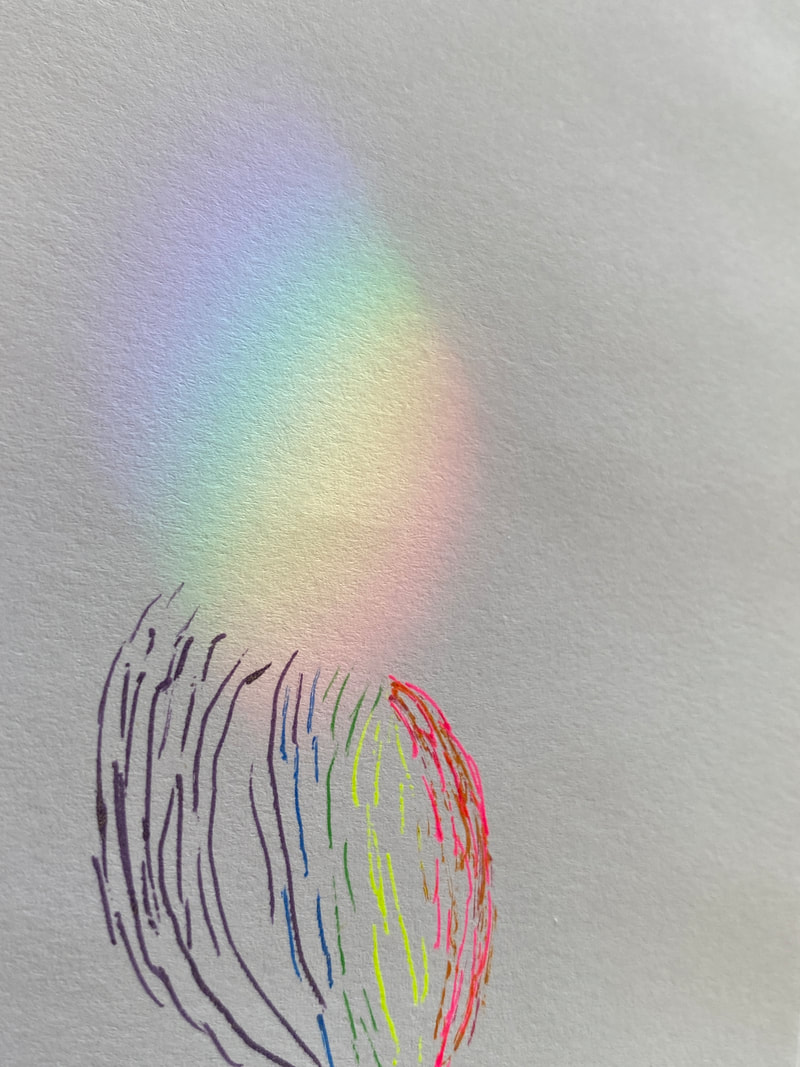
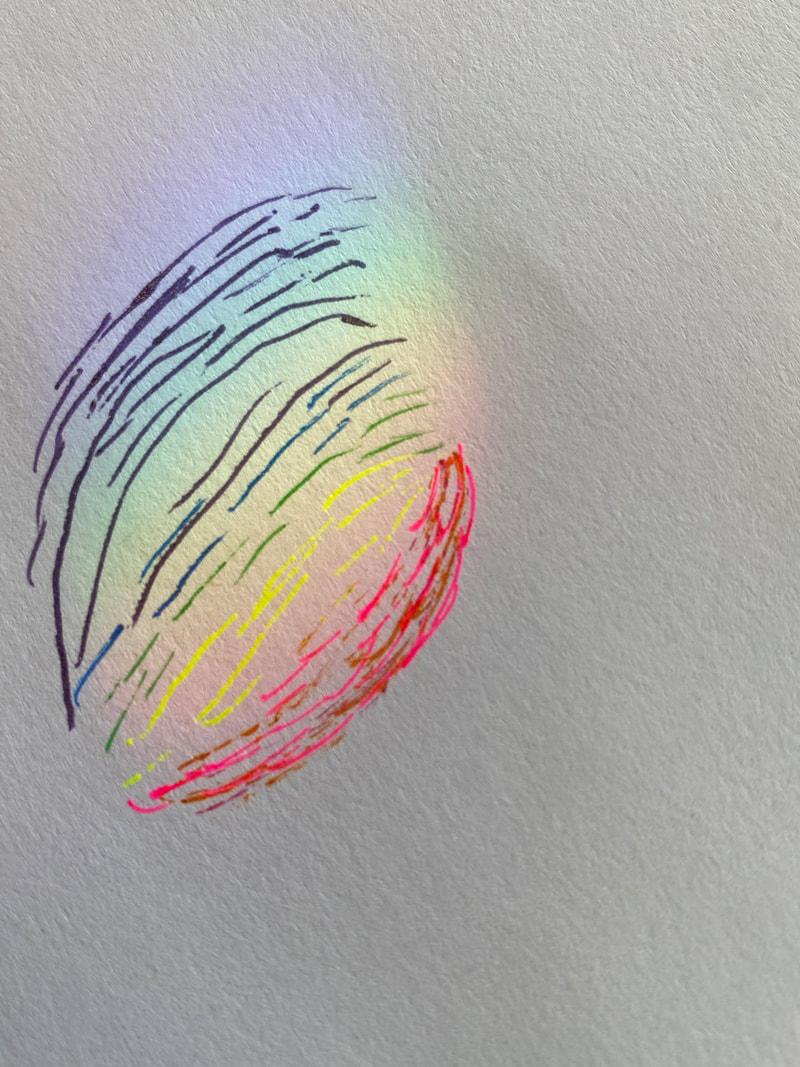
As adults, we tend to lose our playfulness. Until I had my daughter in 2011, I hadn't really indulged in play during my 20's and early 30's. Sure as a child and even into highschool I was quite playful. But, life has a way of subduing those parts of us. It wasn't until more recently that I realized, in the past 4 years since starting my business, I hadn't had a regular activity that was “just because.” Without a goal, or outcome or purpose. Kayaking or stand-up paddle boarding probably came the closest, but even that has drifted. I was reminded by a mentor of mine of how important play can be in embodying our true selves. Choosing a playful approach, or a specific activity that you might enjoy, can maintain quality of life and keep our sense of wonder activated. Most of 2023 was a whirlwind, with notable burnout symptoms for me, so playful moments didn't seem as obvious…or I wasn't in a space to receive them. Burnout also led to a disconnect from joy, and so in this season I am figuring out what brings me joy. Even if it's not the same things that did before, that's ok. I want to be open and not force it. While enjoying my morning coffee this week, I glanced down at the drawing pad on the table. It was there because I had this urge to release some stuck emotions through doodling. I immediately saw the rainbow and felt the nudge to trace it. So I did. I kept going, moving the pad this way and that to get different patterns and shapes. I felt relief of the stuck sensations that had been present, and just kept following the intuitive nudges to color and be in the present moment with whatever random creations were coming through. Afterward, I felt much lighter. I didn't spin a story of what the stuck emotions were or why they were there. I just followed the urge to create, just because, and let it be.  Many of my clients know I refer to our work together with the voice as playful. There must be this intention because a) why take yourself so seriously?! and b) the voice is also an ever-changing kaleidoscope of sound that we can create with anytime we want. Maybe it's humming a little ditty, trying new silly noises just because, or allowing raw and real vocalizations to release emotions stuck in the body.
During a session last week, my client E was feeling grief from a family situation and anxiety about a business issue she had to resolve but didn't quite know what to say to the other person so she was hesitating, editing and filtering herself. In her session, we used the voice to connect to her wisdom within and various tonal sounds to help expel any emotions that weren't sufficiently satisfied from verbally processing or over-analyzing. Within 20 minutes, she felt more grounded, steady in her voice power and was able to easily craft what she wanted to say to the person with the business issue in such a caring, neutral and clear way. Her voice matched the words she intended to use, and thus her entire message was resonant and well-received. Because E was willing to play with her voice, be with the sounds as they flowed through her body and detach from a concrete outcome, her energy lightened, the clarity to say what she really wanted came through, and she felt more at ease in the process. When that playful urge arises, trust it. Give in and enjoy the break from logic, doing more, forcing, over-thinking. Just Be. What can you do this weekend that is playful? No goal. Just because. Even if no one else understands, it's not for them. It's for you. Through your custom 1:1 Empower Your Voice journey, you start playing with your voice so that you connect to your inner power and speaking clarity, so that your voice rises above, even through the difficult conversations. Could this be for you? Let's chat to see what's possible -- Book here or email me directly [email protected] to coordinate a convenient time for you! Humming is one of many techniques/facilitors that can support recovery of the voice. I wrote a prior overview about its use here. In Nov/Dec 2023, I got laryngitis, and so I wanted to guide you through some of the more detailed steps of how I support my voice, and similarly my clients, through recovery with more ease and speed. Day 1 Laryngitis: Initial recording at onset of laryngitis, you can hear the breathiness, pitch breaks, weakness, breath-less-ness, reduced volume. I had noticed signs of potential issues a couple days preceding this, slight sore throat, globus (glob/lump in throat sensation), and fatigue with talking but this is the day the voice quality began to deteriorate. I also believe in affirming language, speaking loving-kindness to ourselves and others, and even in these moments, I believe our voices are powerful conduits to wellbeing, speaking into existence from Divine Source our intentions and how we desire our life to be. Day 2-3 Laryngitis: I think it's important for folks to hear these real-life examples. Here's me exploring and explaining why I am using humming versus the vowel 'ooo' or 'eee' to help restore my voice in this particular moment. Notice how I am trying out vowels-only versus humming (using the m/n/ng sounds depending on the relief and resonance they achieve). The breathy-onsets (like false starts in the voice), where air escapes before any sound starts, are an important indicator that swelling is still present. Depending on which pitches in my range I try, it will be better or worse. Day 4 Laryngitis: I continued the triage tips that help soothe the throat and respiratory system overall, while also checking if there was enough voice to continue the recovery humming exercises. Thankfully, there was more voice at certain pitches, and was already sounding smoother! Remember these are hyper-specific techniques to assist when in recovery-mode! While humming is a great tool for general voice warm-ups and cool-downs even when feeling well, that has different goals and approaches.
My voice fully recovered around Day 6-7 in clarity, and after Day 10 for power and full volume and ease (that longer timeline was primarily due to the overall fatigue waves that were present throughout that particular cold and a lingering cough). IF voice symptoms last for 2 weeks, without changing or notably improving, IT'S TIME TO SEE A SPECIALIST! Send me an email anytime with questions, as I'm happy to help you locate an ENT/Laryngologist and Speech-Voice Pathologist near you when I'm able. In the meantime, a couple resources that may be useful as you do your due diligence: How to find a voice physician Voice Expert Search by state (*this list is a great start, but not comprehensive and unclear how often they update so be sure to reach out to ones listed in your area to ask questions and reduce the time spent being bounced from provider to provider) If you have questions, or are ready to protect and explore your voice, let's schedule a chat to see what's possible so you can elevate your comfort and confidence during speaking voice activities so you establish healthier voice use while reducing disruption to your social life and work responsibilities. You feel stronger, reliable and more captivating when speaking, you and are more aligned with your natural, resonant way of communicating for years to come! Email [email protected] and let's activate your voice journey!  GUEST BLOG - Contributed by Danielle Mendoza, Confident Concept “Sounds like you fit into the category of vocal athletes.” When Brienne first spoke those words to me, I was shocked. I’m not a professional singer, actor, television personality, or social media influencer. But as I let her words sink in, I had to acknowledge that I do use my voice in every aspect of my business. From networking to speaking with clients to podcasting, my voice is turned on and in use for most of my waking hours! If I thought of someone running for most of their waking hours, it’d be easy to see that they fall into the “athlete” category. Accepting and adopting that understanding of myself was an important pivot. Up until this point I was functioning from a place of using my voice without much conscious effort or understanding. I was taking it for granted.
Then the vocal burnout started to happen. My voice would get tired and slip into gravely vocal fry more and more frequently, and I was having some soreness in the muscles in my neck and throat. My best method for soothing my voice was to simply stay quiet for more of the day, but my work continued to demand more and more of my voice. It was then that I knew I needed the help of this person I met in networking who called herself a Vocal Empowerment Guide. While I didn’t fully understand the title, I knew Brienne could help me understand more about what was going on and how to remedy the problem. I had no choice but to invest the time and money in my voice—my entire business and financial livelihood depended on it. As we worked together, I was able to better understand what was physiologically happening to my voice. Suddenly aware of my regular throat clearing and daily drop into hoarseness, I was relieved to have expert guidance as I worked through undoing some of my unhealthy vocal habits and restoring my vocal health. I now had regular practices to put into place that would condition my voice, including vocal warm ups and cool downs. Looking at myself as a vocal athlete, this all made so much sense! Athletes warm up before performance or practice, they cool down afterward, and they regularly condition their muscles with complementary exercise. This simple but profound ah-ha gave me the motivation to integrate the practices into my everyday routines. Our sessions continued weekly, and I was impressed with Brienne’s understanding of the voice and breathwork. We began to discuss the breathwork and intention setting portion of our time together. I realized then how our vocal expression is deeply rooted in our soul. In fact, I came to fully understand how the physical voice is a direct manifestation of our spiritual well being and connectedness. As a writer, I’ve known that our “voice” goes beyond the physical sounds we make. It is our voice we’re using when we pour our thoughts and ideas out onto the page. I knew this, but until my time with Brienne, I hadn’t put two and two together when it came to physically using our voice for things like public speaking, podcasting, and interviews. My voice is in use no matter what medium I’m using to express myself. And being able to tap into my intuitive voice is always what carries me through to vulnerably sharing my thoughts. The connection from inner self—the voice of my higher power as experienced and understood by my inner observer—feeds the outer expression I bring forth in all of my work. Being able to authentically share myself through my voice is important to me and to the impact I hope to have on this world. But it can also be a nerve-racking experience. When we are hanging out in trusted circles, speaking to friends and family who help us feel safe and loved, it’s easy to boldly state opinions and beliefs. We’re open, fluid, and allow conversation to flow. It’s as if the words just go from within to pouring out our mouths without hesitation. We can all identify who those people are in our lives—usually they’re the people easiest to be with. But as soon as we feel even the slightest bit of that safety disturbed, we tend to clam up, have a harder time finding the right words, and filter more and more of what we want to say through our conscious mind first. With our friends we have a lot to say, but if we try to share on the same topic in a setting where our thoughts are being captured (like going live on social media or public speaking) we get nervous and the flow is disrupted. I have found this same phenomenon at play when we’re capturing our thoughts in writing. As I wrote my first book, I actually found it easier to speak out what I wanted to say as if I were talking to a friend, and I used voice-to-text on my notes app to capture most of the words. It freed me up from the pressure of the blinking cursor on a blank page, and it’s the number one piece of advice I give the women in my programs. As a leveraged book strategist, I guide women through sharing their expertise, personal and professional convictions, and personality on the page. Giving them permission to capture their words in ways other than typing on the computer has helped them open up and reach their word count much quicker than they would otherwise. In fact, if they’re really struggling to overcome a bout of “writer’s block”, I tell them to get a trusted friend or colleague on Zoom, hit record, and let the words flow in conversation. Since working with Brienne, I now have words for what writer’s block actually is—it’s simply the disruption of the flow from the inner self to the outer expression. We are truly achieving vocal empowerment when we’re letting outer expression flow freely from within! Of course, there’s still fear to overcome, even for myself. In my experience of writing and publishing multiple books, I’ve learned we often overcome the fears bit by bit. We let go of the fear that stops that flow of expression, and then we have to move through the fear of putting ourselves out there once our expression has been captured on the page. And fear can show up in some funny ways! I remember as I was moving through the final round of editing my 2021 bestseller, Manifest Success, I called my husband in a panic. “The book,” I breathlessly uttered, “it just…starts.” I was feeling insecure about the opening of my book, and putting on myself the heavy pressure of expectation that my book would have some big, profoundly explosive opening. “Yeah,” he said, “that’s what books do.” Laughter immediately flew out of me, releasing the pressure I had piled on myself. His words seemed to press an internal release valve I hadn’t been able to access on my own. Facing fears can do that to us, keep us from accessing exactly what it is we need, blinding us to what we know to be true in that moment. Moving though the journey of vocal empowerment has led me to see the similarities between speaking and writing. Both require us to share ourselves openly with the world—a scary, vulnerable experience. And both allow us to create an impact far beyond any we could imagine. After launching my book, the response from readers was moving. Many reached out to tell me about the impact my book had on them, and shared the stories they had that were similar to my own. I knew I was being called to help more women write their stories and create a similar impact by openly sharing their insights, beliefs, and personalities with readers. So I stepped into the role of publisher and compiled an anthology of powerful stories for the first volume of Business On Purpose: Inspiring stories of women overcomers who are changing the world. This book series is specifically designed to help women demonstrate their expertise as they connect with others on a human level by sharing their stories. We are all human, and we all have something of value to share. Whether it’s an intimate discussion between friends, a widely published podcast episode, or a book we hope will stand the test of time, our impact ripples out through our shared voices. Empowering ourselves to bring forth the most open, truthful expressions of our inner light will always create the most impact. So I implore you to let go of your fear and be bold—go forth and share yourself with the world. Someone out there needs to hear from you. Dreaming of writing a book to build your legacy and scale your business? Download the book guide How To Write A Book That ACTUALLY Makes Money to discover 6 things you need to know before you start writing. How you do you feel about the sound of your own voice?  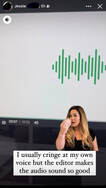 When you notice what words come up for you, are they kind or critical? Many folks are surprised by how their voice sounds on recording because that is the least frequent mode they hear it. In a recording, we are hearing our the sound waves from our voice filtered only through the air. In our heads, we hear the sound waves of our voice filtered through the bones in our skull and also the air.
My friend Jessie recently posted in her FB stories that she was excited to be recording money manifestation meditations for her membership. Yet, the moment she shared the progress, she diluted that excitement by critizing her own instrument, the source of communication. While editing software is necessary to bring a certain finesse to a finished production, do we do ourselves a disservice by editing our voices so much until they are acceptable or pleasing to us? On the other hand, what becomes possible when we accept and appreciate the sound of our voices in their most natural, resonant and optimal state? Biologically speaking, our perception of our own voice varies because of how the 2 different modes to filter the sound are designed in human communication. We spend 99% of the time hearing ourselves, inside ourselves. So, it can understandably be somewhat jarring when you first hear your voice on playback. Sound waves are powerful, they can travel short (if higher frequency) or long (if lower frequencies) distances. Yet we all understand that the output of sound that our auditory perception detects is dependent on the filter through which those sound waves travel. For example, we know when we speak and plug our ears, we perceive our voice as "louder" in our head. If we are in a room with significant echo, the sound of our voices reverberating and reflecting back to us is distinct from a sound-proof booth. This is all about perception, and what we have acclimated our auditory senses to experience. If we are only used to hearing ourselves within our skull, and never think twice about it, are we truly accepting all facets of how our voice shows up in the world? If you listen back to a recording of yourself, is there a possibility of shifting the narrative that you'd label the sound as 'cringy, too deep, too high, like a young girl, like a boy going through puberty, like a man, too feminine, too soft, dull, flat...etc' to something more compassionate and kind? Perhaps that is too big of a leap at this moment. And that is completely okay. I see you. I honor where you are on your voice journey. In an effort to better understand people's experiences and thoughts on this topic, I would love to hear your honest, vulnerable and real-life examples. I created a qualitative voice survey to determine what people think about their voice. My goal is to receive as many honest responses by World Voice Day (April 16th!). You can submit your answer anonymously. You also have the option to join my Empower Your Voice email community by including your email at the end of the survey. Would you take 3-5 minutes in your day and share your experience? Access the survey here! If there is anyone you know who would love to learn about this topic and participate in the survey, please share this blog out! I appreciate you so much! You and your voice are worthy. Glory I set the intention Dec 31st to enter meditative Divine dialogue with eagerness for receiving my word for 2023. I offered gratitude for three to four aspects in my life currently. I connected to my breath, all the way to the root and through the ground, feeling the support, softening, pleasure and wisdom in my body. The word dripped in and I felt a smile form at my lips and a giddiness, lightness, deeper holiness, and satisfaction throughout my being. The synonyms for this word felt satisfying, and in all its glory, the beauty of these words and excitement they invoke is meant to be shared. I am eager to experience all the ways Glory shows up for me this year, the facets to be uncovered, and the praise I can amplify within myself and for Divine God. Glory Be Be Glory Since the revealing of my word, so many moments have occurred. Glorious sun rises. Glorious swift healing. Witnessing with admiration the glorious wins of others. Feeling the glorious blossoming bouquet that is my heart. Reveling in the opportunities that Divine has shown me, and exclaiming what I desire from my glorious intuition, some of which include: *my mission heard and received *health and vibrancy, strength and ease in my body *calling in my conscious partner *growth in sustainable and generous businesses *speaking out as uniquely me. No shrinking. *Health, self-love, and prosperity for my daughter *A new spacious home, simple elegance, lake-life and lots more laughter Thank you glorious God for this journey and the new evolution of my path. May all reading this feel their expansive potential, glow within the love of their hearts, and honor all their gifts by sharing them with others. You and your voice are worthy 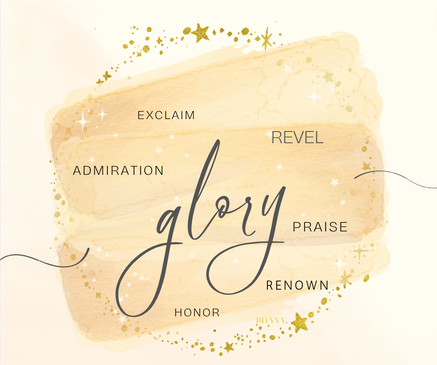 IntimateMy word from 2022 I became more intimate with my intuition, my bodies’ wisdom, my desires, my boundaries. I became more intimate with wide swings of big emotions with a new puppy in the house. I became more intimate with the pendulum swinging more broadly with finances. I became more intimate with trust, with receiving, with Divine God-Goddess light guiding my life. The depth of my intuition has been honed, as I’ve noticed in certain situations, in real-time, I tune in and speak from what the inner voice is saying. What used to require processing time after an interaction (sounded a lot like "oh I wish I would have said that!" or "that would have been witty!"), or feeling too awkward to pause in the moment, has now shifted to feeling much more natural, enjoyable, and powerful. For myself. For my clients. For my communication. I’ve been shedding layers from myself for a few months now. There are many missteps, tears and learns from business, friendships, finances and more. I remained devoted to listening from within, and, more deliberate recognition of self, with grace and compassion through the heavy, constricted times. New Years Eve is not a time I specifically ‘plan’ for, nor do I mind if I have social events to attend or not. I will go if invited and aligned. Or, I will stay home in my cozy pjs. I tend to like my regular bedtime. I like to bring in the year with the way I’d like to experience it. I meditate. I reflect. I nourish. I tidy. I have my Divine dialogue to receive my word for the incoming year. Today, following a question on a post about ways to close out the year, this idea flowed in: Choose 2 candles. Declutter your space. Prepare a warm beverage. Light one candle, representing 2022, spend time reflecting, honoring and witnessing yourself for the wins and learns. When you feel complete, blow it out. Light the second candle to usher in 2023, ignite the feelings you desire to experience, gaze at the glowing flame and envision your desires as here and now. Being the whole, worthy, prosperous, joyful and peaceful human you inherently are, accepting that and feeling it saturate every cell of your body, with a smile on your face. This practice served me immensely. I released density, healed, and my 2023 word dripped in. I felt held, supported, grounded and content with tingles of eagerness, all in the same moment. I don’t think the New Year has to mean a “new you.” You may be in the midst of an ongoing shedding and re-defining, like me. You may be cycling with the seasons and traveling inward more intentionally. Or you may see the date as arbitrary, and follow the rhythms of your own heart for what is needed. Coming to a close Continuing Calling in anew Wherever you are, you are where you are meant to be. Breathe. Tune into your glorious inner intuitive voice, and ask the Divine for affirmations that will serve you today and in the year to come. And if you know me and my work, you know the next step: Speak them out with your voice. Amplify. Notice where in your voice range feels delightful and easy. Repeat, as if chanted, as many times as you'd like, getting carried by the sound, breath and body vibrations. I enjoy @Innermade on IG, and this graphic felt timely and useful: 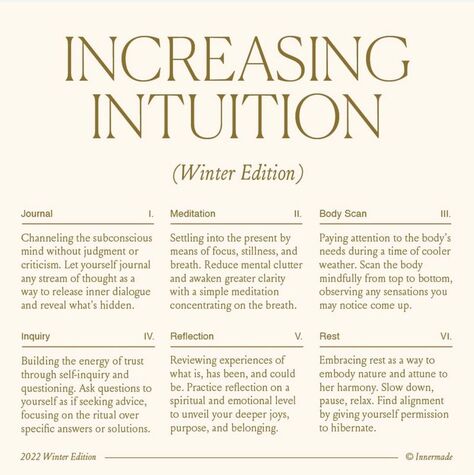 You and your voice are worthyOver the last couple of years, there’s been a lot of talk about inner monologues. Apparently, some people hear that running voice in their heads . . . and some don’t. And no matter whether a person has a monologue or doesn’t, they’re usually surprised to learn that the other kind of person exists! I am one for whom the constant running mind-chatter was incessant, and for the first 32 years or so of my life, it was largely self-critical and judgmental. Yet, all that changed when I became reacquainted with my self-worth and my wisdom within. While we may not all have a loud inner (critical or not) monologue, we do all have an inner voice. Our inner voice is our intuition: that soul-led, Divinely sourced guide that is our truest self, a gentle whisper within, or a deeper ‘knowing’. This inner voice expresses our truths, our desires, our being-ness. It might speak to us in words, phrases, images or symbols, but it does speak to us. When we are most aligned, when we are honoring ourselves and tuning in daily to listen, that Divine inner voice can emerge powerfully, and be spoken out loud with our physical voice. So many experts have a transformative message within them, but when they try share it, they struggle with:
And that’s part of my gift of guidance: elevating the voices of vocal athletes (speakers, teachers, coaches, executives) to use their physical voice to more vibrantly share their inner voice—and change the world with their message. I’ve been intentionally putting my focus where my intuition is sending me, and it’s leading me to beautiful places. One thing I’ve been focusing on and continue to get an intuitive "yes!" to is a workshop with my friend Cathlyn Melvin, who is a TEDx Coach and messaging expert. Together, we created a hands-on experience for experts who want to share their message on the TEDx stage, using their voices in a powerful way. And as I follow my own heart, letting the intuition lead and the mind-chatter to lessen, and show up in ways that create magic for the people I work with . . . I feel like this workshop is a beautifully aligned way to do that. I hope you’re feeling that beauty in the things you’re pursuing, too. Because you are worthy. Your voice is worthy. And I’m grateful to share mine with you. * * * * P.S. I’m one of those people who has an inner monologue! Do you? Comment below and let me know! P.P.S. On November 9th, I’ll be co-teaching Press Play On TedX: Giving Voice to Your Idea Worth Spreading, an intimate 3 hour workshop with TEDx Coach Cathlyn Melvin. From hot seats to interactive, it is implementation-driven! We’ll help you get clear on the message you want to share and how to use your voice to share that message with the greatest impact. Registration is open, secure your seat here. *if it's past the date listed, please comment below or email directly [email protected] to jump on the waitlist!  “I wasn’t being truthful about my marriage”
“I fumble over my words and get in my head about what to respond with” “I didn’t feel that they heard me even though I knew what I was talking about” “I felt dismissed at the dinner table with my family” “I was told to be quiet and not speak unless i had something good to say all the time as a child” “I wanted to speak up but others jumped in” “I was made fun of for my speaking/singing voice” “I feel fearful when sharing my thoughts to a group” These are just a sampling of statements women (and some men) have made to me over the years when we are assessing what has changed about their voice that is hindering them and their communication. I often say “For some people, when under prolonged stress, conscious or unconscious, the result is a stomach ulcer, for others, it’s a voice change” There are differences in the voice and laryngeal function when the Vagus is hopped up in Sympathetic Nervous System (SNS) overdrive vs. when in Parasympathetic Nervous System (PNS) mode! The key trigger: Stress Stress (physiological, emotional, inter-personal etc) can trigger a voice change. Often it is from muscular tension, decreased breath support (more holding/shallow breathing when in fight-flight-fear-fawn-faint mode) or psychological factors that can make voicing and speaking more effortful, strained and fatigued. It is difficult to predict who will experience stress-related changes to their voice. Thus awareness, vocal play, and proactive wellness is key! "Why do only certain persons react to environmental stress and inter-personal conflict by developing an abnormal voice? Why is it that others who have emotional reactions to stress and conflict never have voice problems? Why is it that still others express their personal problems through some other organ systems other than the larynx?" --Arnold Aronson, PhD, Speech Pathologist, Preeminent Speech and Voice Researcher, 1990 Stress is a chronic pervasive problem in the world, and is the underlying cause of many conditions. The voice is no exception as it is also susceptible to stress. Feeling choked up when speaking to a crowd? Tightness in your throat when nervous? Speech sounds stopping or crackling when you’re trying to have a hard conversation? Shortness of breath when speaking on stage? When stress and emotional dysregulation or repression impacts the voice, it's not an isolated incident. It is one of the reasons I have approached my work holistically for so many years and continue to advocate that if you are desiring to enhance your voice, to first fully ensure the folks you are considering hiring are vetted, as there is still a lot of misinformation, judgment, and harmful practices in the voice/speaking coaching world. Emotions and voice are inextricably intertwined. Early in my clinical career, I didn’t really recognize the specifics of what I was doing when crafting a session with someone, it just made sense to me to incorporate emotional awareness into the person’s care, when applicable. In the voice science literature, the current term used to characterize voice changes that show no physical abnormalities (i.e. when assessed with a scope to ensure the structures of the larynx and vocal folds are intact; in this post, I spoke about the physical toll a voice experiences when someone is a Vocal Athlete), yet an obvious mechanical and functional interruption is known as “laryngo-responder”: A person who is pre-disposed, either by physical make up or personality to express emotional distress through either function or sensation of the larynx or voice (Aronson & Bless,2009). For laryngoresponders: Muscle activation in the larynx and areas surrounding the larynx demonstrate much higher activation when exposed to stress as compared to non- Laryngosponders. In other words: The muscles within and around your larynx and neck tighten & hold tension. Areas of "least stability” in the body can be weakened and then discomfort arises when stress becomes unbearable that the expression of that stress occurs in the vulnerable area. In other words, in the voice, if there are changes that occur, without any structural abnormality or issue, it is often the result of a 'tipping point' -- Chronic stressors weakening the system and then something minor, like a cold, or increased anger, or nervousness, comes along and voice disruption occurs. This is often why people lament “Why now? I’ve been talking for X number of years and I should know what to do!” When this doesn’t resolve within a couple weeks on its own…it’s time to prioritize your well-being and voice health. Your voice is speaking to you. Your body’s signals matter. There’s A LOT to say about stress, emotions, the vagus nerve and voice, yet this is the 101 lesson for today. Clients who hire me bring their open-mindedness and willingness to get uncomfortable with what they need to release from within, proactively re-stabilize their voice, regain assertiveness, and re-ignite a deeper connection to their body wisdom. This brings about ease in communication, improved leadership, success on stages, and an overall more vibrant way of being. I’m honored to hold a judgment-free zone and witness your insights. Bringing all of you and the real you is what accelerates your speaking success! Kathleen Cameron and I were recently discussing the improvements she has made in her voice goals. She is not pushing or forcing her voice near as often, and is noticing it flows with more ease while still being herself! Previously, she felt she had been trying to say/be what she thought people needed to hear from her, but that wasn’t sustainable. She stated “Now I just speak!” However, her speaking requirements while running an 8-figure company are still intense! She has media appearances, a team to lead, client calls to teach, events to host and 2 beautiful girls to care for…all increasing her voice dose (amount of voice use in a given day/week). She is a Vocal Athlete. A vocal athlete, who, just a few months ago, had a very unexpected hit to her voice’s power source: Emergency surgery to her lungs. Kathleen is one of the most successful personal development & manifestation mentors in the world, and she knows a thing or two about creating who she is becoming, her desired life and is in an incredible new season of health & vitality. While we have made some strategic adjustments to her schedule in addition to exercises she practices for longer term stamina and conditioning, she is still in process, and there are times where her voice can sound tired or raspy. It’s often for multi-factorial reasons. Yet…People have, unsolicited, been saying to her: “You’re not speaking your truth” or “it’s clear you have emotional blocks” when they hear the occasional tired or raspy sound. Naturally this is aggravating to her and completely presumptuous on their part. I adore learning about and believe in quantum energetics, moving stuck emotions, as well as our innate healing abilities AND this is not always what impacts a voice. When you are a vocal athlete and REQUIRE your voice at such an intensive level of talking, there is a physical COST to that! In a high performance voice like Kathleen’s, and many of my clients, this is where the physical, figurative, and intuitive all are explored. Kathleen is a master of self-development and has been taking steps to condition her physical instrument. I applaud her proactive approach to caring for her voice, something that the majority ignore, take for granted, or judge themselves or others harshly for how they sound. There is no place for shaming, gaslighting or pre-supposing what a person needs or is going through. Consider this: No one would shame a basketball player and say “oh you injured your ankle, it must be because you aren’t walking in integrity/you are probably repressing something." That injury is the physical toll of a high performance body. Let’s break it down another way: If I say “My name is Brienne. My pronouns are she/her/hers. I have a daughter. We take care of a puppy. The women I serve are incredible humans who are on their self-growth path and ready to learn about their voices in a new way to enhance their wellness, communication and way of Being” Those are facts. That is my truth. I am in full alignment with those statements. No emotional wobble exists. If I repeat that for 60 minutes, my voice would feel tired. Now, multiply that by 5 more hours (often how much my clients are speaking on intensive days) and I would be more fatigued, potentially even raspy. Now, compound that by having no knowledge of how the voice worked, no warm-ups, and no awareness of how to shift to a healthier production? That is a recipe for long-term injury. This is why preventative voice wellness matters! That raspy quality has nothing to do with what I said or my belief about it. It has to do with the physical load my voice sustained. Voice conditioning, just like an athlete physically conditions and optimizes the efficiency of their body to be at their best performance, takes practice, consistency, and is crucial for those whose livelihood depends on speaking day in and day out. As I guide my clients, emotions are addressed. The voice is a barometer to possible underlying, unearthed issues. AND, sometimes, it’s as simple as inefficient overuse. Period. Another analogy, because why not: A woodworker who is sanding her carvings by hand, has the repetitive stress/strain of moving the sandpaper along the wood grain, which results in an ache in her wrist. She doesn't regularly stretch or strengthen her wrist or arm, yet notices the intensity of the ache vary depending on the duration of the sanding motion. Will you say that the ache is due to repressed emotional issues or blockage? No, that would be ridiculous. The voice is a repetitive use instrument. It can withstand phenomenal stress-strain friction on a daily basis AND repetitive motion injuries ARE a risk-factor for vocal athletes! Before you assume what may be going on with someone and their voice changes, perhaps there needs to be closer, internal examination first. Pause, breathe, ASK if they need anything, and LISTEN. Don’t spill your assumptions out onto them without consent. As our conversation continued, I witnessed her ‘edgy voice’, as she called it, still emanate clearly and resonant EVEN while showing her strong emotion, which is an improvement from months ago when her voice previously pushed from her throat. Vocal athletes benefit from vocal conditioning, so their full range of emotion and essence is expressed in a healthy, sustainable way! * * * * * ****************** P.S. Vibrant Voice VIP Days are the perfect opportunity to jumpstart your voice journey for more reliability, expressiveness, stamina and truthful presence. Connect here or Email [email protected] if interested and I’ll send a helpful PDF with the details. You and your voice are worthy. Talk soon!  |
AuthorVoice Activator. Lover of the Larynx and Lake Life. On a mission to elevate women's self-worth & wellness via their voice. one delightful tween daughter. Dabbles in professional voice-over occasionally. Reminding you that You and Your Voice Are Worthy! Archives
April 2024
Categories |

 RSS Feed